
Budget cuts remain under scrutiny as the deadly Texas flash floods have claimed over 130 lives; NSSL Research Labs face elimination.
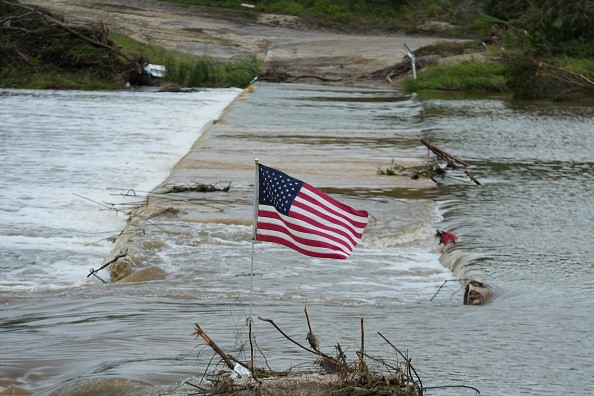
KERR COUNTY, TEXAS, UNITED STATES – JULY 7: A US flag is seen around the Guadalupe River, which overflowed, contributing to a disaster that has killed at least 104 people across the region, including campers and staff in the US state of Texas on Monday, July 7, 2025. (Photo by Lokman Vural Elibol/Anadolu via Getty Images)
Maliyah Simone, CRDN
August 25, 2025
A catastrophic flash flood claimed over 130 lives and left more than 100 people missing across Central Texas. At one point, the unaccounted included campers and a counselor from a Christian summer camp, intensifying a national debate over recent budget cuts and persistent staffing shortages at critical national weather forecasting and research institutions.
The tragic events occurred primarily in Kerr County, near Kerrville, about 60 miles northwest of San Antonio, and extended into Kendall County. The Guadalupe River swelled rapidly after intense rainfall over the Fourth of July holiday weekend. While emergency alert messages were sent to Kendall County residents before 5:30 a.m. and a new siren system in Comfort, Texas (Kendall County), was activated at 10:52 a.m. — after initial flooding had already occurred — questions remain about the effectiveness and timeliness of alerts. In Kerr County, where over 100 deaths have been confirmed, officials have acknowledged a lack of a county-wide public warning system. Some residents reported not receiving or understanding National Weather Service alerts, despite NWS issuing multiple warnings, including a “PARTICULARLY DANGEROUS SITUATION” alert at 4:03 a.m. on July 4th.
At the heart of the controversy is the National Severe Storms Laboratory (NSSL), a crucial institution for developing tools used in flash flood forecasting. The proposed Fiscal Year 2026 federal budget for the National Oceanic and Atmospheric Administration (NOAA), which oversees the NSSL, explicitly calls for the elimination of funding for all climate, weather, and ocean laboratories and cooperative institutes, including the NSSL. This move, reported by sources like Yale Climate Connections, would effectively shut down the NSSL and other National Severe Storms Research Laboratories (NSSR), which conduct vital research to improve the understanding, forecasting, and warning of severe weather events like thunderstorms, tornadoes, and flash floods. Their complete shutdown would represent a significant blow to the nation’s severe weather preparedness and research capabilities.
Further exacerbating concerns is the ongoing staffing crisis at the National Weather Service (NWS). The NWS has lost more than 10% of its staffing and close to 600 staff out of approximately 4,200, leaving it critically understaffed. Some individual NWS field offices have experienced staffing reductions ranging from 20% to 40%, and 40% of national weather forecast offices are reported to have significant staff vacancies. This substantial reduction in personnel raises questions about the NWS’s capacity to adequately monitor and respond to rapidly developing weather threats.
Five living former National Weather Service leaders have issued an open letter, stating that “Our worst nightmare is that weather forecast offices will be so understaffed that there will be needless loss of life.” This warning reflects a broader concern among meteorologists that budget cuts and staffing shortages could impair forecasting capabilities and lead to greater tragedy.
Among the confirmed fatalities are at least 27 campers and counselors from Camp Mystic, a Christian all-girls camp situated along the Guadalupe River. The camp, like many others in the popular Hill Country region, was caught off guard by the speed and intensity of the rising waters. Search and rescue efforts continue, with over 160 people still reported missing across the affected areas.
The proposed budget cuts to the NSSL and the severe understaffing of the NWS come at a time when extreme weather events are becoming more frequent and intense. As Texas grapples with the devastating human and economic toll of this flood, the calls for a reevaluation of federal funding for weather research and forecasting are growing louder, with many arguing that such cuts ultimately carry a human cost.