
In a World Increasingly Mimicking a Scene from Wonder Woman, 1984, “You Can Have it All,” Where is the Line Between Beauty and Unacceptable Debauchery?
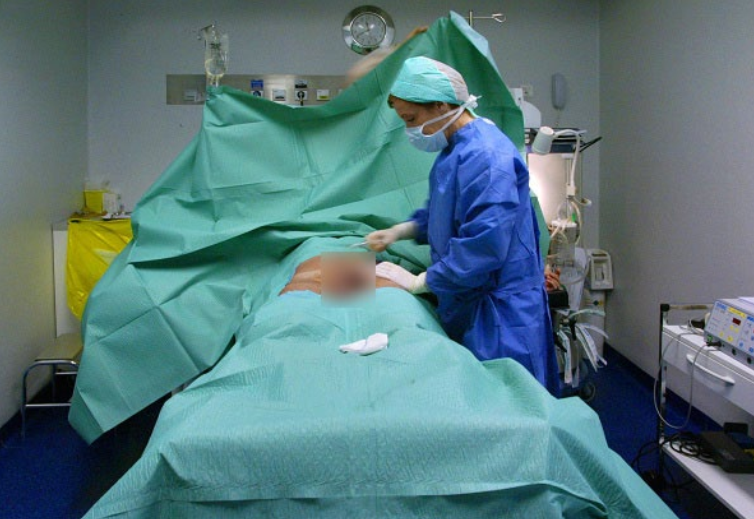
A plastic surgeon operates on her patient during his penis enlargement operation, November 2003 in a plastic surgery clinic in Paris. AFP PHOTO MARTIN BUREAU (Photo by MARTIN BUREAU / AFP) (Photo by MARTIN BUREAU/AFP via Getty Images)
Jade Lopez, CRDN
August 22, 2025
Over 33 million people worldwide get cosmetic surgery each year, ninety percent of those procedures are completely elective and not medically necessary. Within the past few years, the number has significantly risen in popularity, primarily among women, in the United States. However, the rise in cosmetic surgery has significant risen among men as well. What was once considered exclusive, generally accessible only to the wealthy and elite, has now become common; mainstream if you will.
Thanks to social media and its (celebrity) influences, society now has a blurred perspective of what’s real and what isn’t. Beauty standards have fluctuated throughout the decades, from thick curves in the 50s to being paper slim in the 90s. We’ve always been influenced by what society labels as “beautiful.”
In modern-day, social media is as prevalent as ever. Platforms such as Instagram, TikTok, and Snapchat promote unrealistic standards through filtered and edited enhanced media, which vulnerable young women and men, cannot help but compare themselves to. Flat stomachs, toned arms, sharp jawlines, plump lips… perfect bodies. Except they aren’t real. They’re distorted or physically changed to appear that way.
From minimally invasive procedures like Botox and fillers to more intensive surgeries like rhinoplasty and liposuction, cosmetic enhancements are now a multi-billion-dollar industry. The cultural and social influence of cosmetic procedures is now completely glamorized.
Sponsored posts and videos from social stars are unconsciously (to us), influencing our decisions to forever medically alter our appearance because somehow, we have been led to believe our natural look just isn’t enough. The “selfie” era has normalized personal image editing and curated online appearances, increasing dissatisfaction with natural features. Social media takes the wheel of cosmetic surgery influence. While it can empower self-expression, it can also distort self-perception and fuel unnecessary and sometimes harmful cosmetic interventions; we’re vulnerable. Teenagers and young adults are so heavily influenced by what they see on their screens and face unavoidable peer comparison. They’re more susceptible to body dissatisfaction and impulsive cosmetic decisions before their identities are fully formed.
Accessibility to cosmetic surgery has become far easier than ever before. Many cosmetic clinics offer payment plans, and many online (sketchy) websites offer everyday people the opportunity to become “licensed” injectors. These procedures are now marketed as wellness treatments, further integrating them into everyday health care decisions. Marketing towards (rather) insecure people, there is now a significant shift. Once something that came with many negative connotations, cosmetic surgery is now often celebrated as self-care or empowerment.
This isn’t to say that cosmetic procedures aren’t unsafe, because many of them are performed with care and precision to get desired results. However, there can be various physical and internal consequences, such as bleeding, infection, damage, scarring, and overindulgence. In rare cases, these can be fatal.
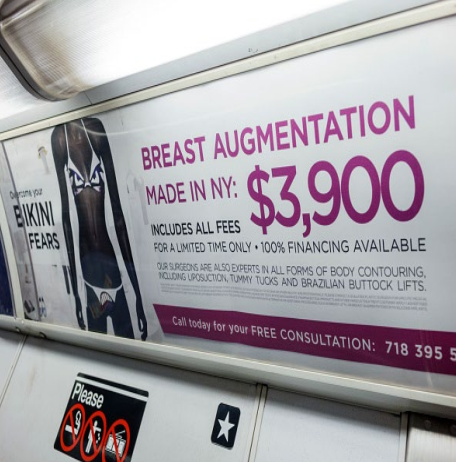
A breast augmentation ad on a train. (Photo by: Jeffrey Greenberg/Universal Images Group via Getty Images)
Sponsored posts and videos from social stars are unconsciously (to us), influencing our decisions to forever medically alter our appearance because somehow, we have been led to believe our natural look just isn’t enough. The “selfie” era has normalized personal image editing and curated online appearances, increasing dissatisfaction with natural features. Social media takes the wheel of cosmetic surgery influence. While it can empower self-expression, it can also distort self-perception and fuel unnecessary and sometimes harmful cosmetic interventions; we’re vulnerable. Teenagers and young adults are so heavily influenced by what they see on their screens and face unavoidable peer comparison. They’re more susceptible to body dissatisfaction and impulsive cosmetic decisions before their identities are fully formed.
Many procedures also need touch-ups or revisits: for example, breast implants? Those may need replacing. Fillers, they can dissolve, and facelifts; you are still aging. Patients often undergo multiple procedures, leading to compounded risks over time.
That does not even include those looking for more cost-effective routes, which lead to going overseas to unknown clinics to have the work done.
Just like any addiction, cosmetic surgery is one that can have people in a chokehold. Developing an unhealthy fixation on achieving perfection, leading to repeated surgeries.
This not only increases physical risks but can also damage tissues and distort natural anatomy. The physical, mental, and psychological effects can be permanent.
Additionally, one of the most pressing concerns is Body Dysmorphic Disorder (BDD), a condition where individuals obsess over perceived flaws in their appearance. This has led to very extreme cases of distorted cosmetic surgical procedures.
On a positive note, cosmetic surgery can provide some benefits. The reported improvement in self-esteem and body image after successful procedures has led patients to report an overall improved quality of life.
However, its steep rise and normalization make us question societal values, self-esteem, and overall health. As the industry continues to evolve, it is crucial to balance the pursuit of aesthetic enhancement with a commitment to both physical safety and psychological well-being.
Even after achieving a sought-after physical change, some individuals experience postoperative depression. Identity confusion tends to set in amidst the search for physical perfection; and some people, unfortunately, never feel satisfied with how they look.
As cosmetic surgery continues to grow, it is essential that society, medical professionals, and patients approach it with informed caution. Psychological screening should be integrated into the consultation process to identify vulnerable individuals and ensure that patients have realistic expectations.
Stronger medical regulation and standardized practices are needed to ensure patient safety, particularly in unregulated markets or through medical tourism. Most importantly, we must challenge the narrative that self-worth is linked to appearance.
The difference between subjective and objective beauty should be enforced. And we must realize that standards are always changing. You are beautiful the way you are, and if you choose to alter your appearance, that is okay too.